


The Goddess Boann
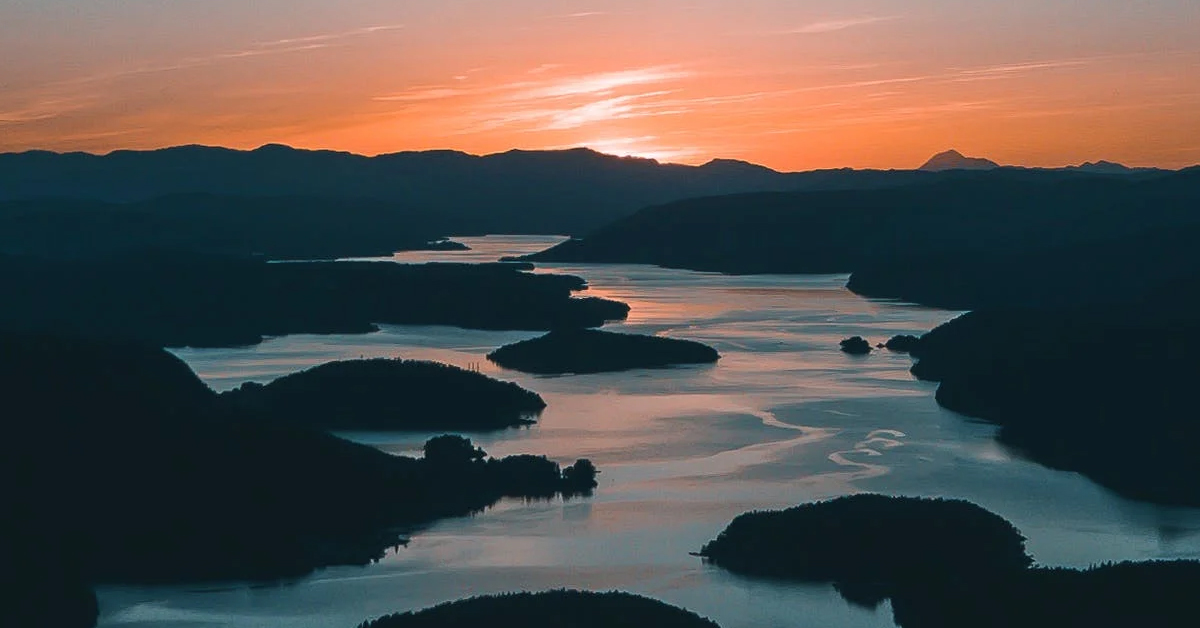
The River Goddess
The goddess Boann may be more familiar to you as Boyne, as in the River Boyne, one of the largest and most culturally significant bodies of water in all of Ireland. Her name most popularly translates to “the white cow”, something we’ll discuss later on.
In Gaelic, Celtic, and Scandanavian mythology, female cows and pigs are held in very high regard and almost always are associated with the power of life and birth. Likewise, the river itself is associated with prosperity, life, and the power of life as well as the passage into the next life. This should come as no surprise as the river is often associated with these things in almost every pantheon/culture around the world.
The Tales of the Goddess Boann
In classic mythology, she falls in love with the god Dagda. While married to Nuachtan she became infatuated with the music of the Father God, the Dagda, a very common occurrence in Gaelic myth. He is described as handsome with golden hair and a broad chest and strong arms. While normally a lofty minded character, eventually the Dagda also takes notice of her and becomes equally infatuated. The romance between them blossomed and the passion continued for what is portrayed to be several years (though in some versions, it only happens once).
In the shorter version, she sometimes gets pregnant, but there are some consistencies across them all. She always runs to the Tobar Segais to try and wash away her indiscretions. When she submerged herself in the well, she was pulled down and drowned. After her soul leaves her, her body becomes a salmon, and the well then overflows, spreading out over all of Ireland and creating the rivers over the Eire with the largest of these holding her soul and taking her name.
In the longer versions of the myth, she (or the Dagda) freeze time, allowing for nine months to pass in the span of a single moment. In these versions of the myth, she is the mother of Oengus, the beautiful one (also known as Aengus O), after which time resumes and the waters of the Tobar Segais seek her out and drown her. In these versions, she lies down and becomes the Hills of Kildare, where the tears of her eyes and the water from her lips form the great rivers of Ireland.
Symbolism of the Goddess Boann
Primarily, the river Boyne is attributed to her, and to this day, it holds great spiritual and cultural significance. In all the depictions of Boann, she is depicted as the White Cow. The name is derived from the word bainne which means milk, specifically cow’s milk. You’ll see in many depictions that rivers flow from one of her breasts and milk from the other. In classic Celtic mythology, we see that the significance of Milk and Water is tied very closely to life or the power that gives life, giving Boann a mystique that is both beautiful and sad.

Manannan Mac Lir
Boann is also associated with Manannan Mac Lir, the god of the ocean, or the first drop of the ocean. He is another source god that isn’t usually mentioned in the Tuatha de Dannan, but in my family’s lore, Liraithe is actually depicted many ways as being a dragon. That dragon is seen as a sea creature that all oceans flow forth from.
It’s interesting that she’s commonly associated with this god of all oceans when she is a goddess of all rivers. In these depictions, she is sometimes portrayed as the Daughter of Manannan Mac Lir and a Water Sprite, who is unnamed in all official versions of the mythology. These are the depictions that give Boann power over the waters prior to her death. While not very expansive, these myths are where we draw the aforementioned depictions of milk and water.
Dagda
Back to Dagda. He is the son of Beile and Danu, who are very much like the Zeus and Hera of the Greek pantheon or Odin and Freya. However, they predate both of those examples sometimes more than 1000 years, and those examples can be seen as epithets of Beile and Danu.
There isn’t a whole lot available for this information, but if you read the Tuatha de Dannan or the Book of Invasions, there’s a lot of good information for understanding these pantheons. BUT, keep in mind that they are written post-British Empire influence and so have been changed greatly with the influence of Anglo-Saxon and Catholic/Protestant monks being the ones to translate and transcribe these things.
The Treasure Of The Tuatha De Danann
The Story Of The Tuatha De Danann
Summary
The stories of the Goddess Boann are ambiguous and numerous, leaving more questions than answers in most places about who she was and what she represented. The sheer number of stories about her is what is responsible for this. There’s no definitive case of who she was or what specifically her significance was.
She’s often thought to be a minor goddess married to a mortal. That’s not uncommon in the Tuatha de Dannan, Ulster cycle, Hero cycle, or Celtic mythology. Many of the gods and goddesses are depicted as being very human. As for Boann, she is married, but she is very human in her emotions as she becomes infatuated with another man. These kinds of indiscretions were severely frowned upon, and there were always punishments afterward that were usually given by nature itself. Boann ends up paying with her life, and when she dies, all the rivers end up being created from her body, but much of that is also a result of the influence of Christian morality imposed upon Pagans in all actuality.
I hope this has helped to demystify the Goddess Boann and clarify some of what I spoke about in my video about her. Please feel free to ask questions. I’ll do my best to answer them in future posts.
Stay bloodthirsty my friends. All Hail.
If you would like to support the creation of this content and have access to some other great offerings, please check out the Black Dragon Tavern Patreon page!