


Loki is one of the most widely loved and wildly misunderstood characters of Norse mythology. I think our clan’s take on his history and some of the details might just blow you out of the water a little bit.
Introduction to Loki
So, let’s get into Loki of the Aesir. First and foremost, we need to discuss some terms: the Aesir, the Vanir, the Jotnar. These are not races of people but instead more like tribes or clans. Even among academics, it is generally agreed that the Aesir, Vanir, and Jotnar are likely different tribes, whereas the Alf and Svartalf are a separate race and are likewise referred to as lesser in the same way man is. This distinction is very important when putting into context the discussion of all the characters in Norse mythology. These tribes tend to be spoken about as if they are different species, but generally, they are not. Sometimes, they are… It gets a little bit complicated.
Another thing to mention before we get into the meat and potatoes of this is that Loki is considered to be a “traveler.” In our lore, there are travelers and traveling gods. They are sort of the same, but not exactly. Loki is a traveler in the sense that he, as an avatar or character, appears in more than one mythology. Now, the difference between a traveler and a traveling god is that traveling gods appear in multiple mythologies in the course of a single lifetime, meaning they traveled in a single lifetime and were known under different names during that lifetime, whereas travelers appear in multiple mythologies or multiple iterations of humanity as it stands in separate lifetimes. The difference is whether or not they are reincarnated and killed or whether they just appear in a single lifetime. You’ll hear these terms pop up fairly often in this kind of content, so it’s important to know the difference.
History of Loki
An important thing to understand about the name Loki is that it is not a name at all but a title. Some of you may know what his real name is and how he earned that title, but for those of you who don’t, stick around until the end. We’re going to talk about that after going over a summary of all the stories that involve Loki and how they all link together to his overall purpose.
I’ll cover some of the historical mentions of Loki, but I’m not going to go into detail on all of the poems and parts of the Eddas in which he’s mentioned. Instead, I’ll list them here so that you can have a look at them yourself at your leisure.
You can find academic stories of Loki in the
Völuspá, Lokasenna, Þrymskviða, Reginsmál, Baldrs Draumar, and Hyundluljód.
What we are going to do is bridge some major gaps in the stories, and hopefully, provide a little bit clearer understanding of who Loki is, what his intentions were, and what sort of god/man he was.
Usually, whenever Loki is referred to in any sort of context, he’s always referred to as the “brother of” or the “son of” his mother or his father. One of the more prominent poems that Loki is mentioned in is the Lokasenna which is where we have a conflict with the gods and the feast of Aegir which is pretty much the end of Norse mythology before we get to Ragnarok. Then, you have Gylfaginning and of course, the Baldrs Draumar which is about how Loki kills Baldr and kicks off the events that would eventually lead to Ragnarok. In those poems, he’s usually referred to as the son of Farbouti or the son of Laufey who are his mother and father.
Obviously, the most commonly known story about Loki is how he killed Baldr or how he went about being responsible for the death of the god Baldr, the most beloved amongst all of the gods. Included in that is also how he made sure Baldr stayed dead. But, there is so much more work that Loki put into it before that, so many more people that died at his hand and wit before we get to that point.
It’s entirely possible that Loki predates Odin. While many scholars debate this, there is no doubt that the giants emerged before the gods. Odin takes on the name Allfather later on, and some of the earliest mentions we have of the Allfather are actually from before Odin’s father is even born. Odin’s father is licked from the ice by the great primordial cow, Audhumla, and that is after the first giants are already born. You have to remember that there are plenty of creatures that are older than Odin, and there are even creatures older than Ymir, or Aurgelmir, who is believed to be the first giant. As with anything, over time, these kinds of things become conflated.
Giant vs Jotun
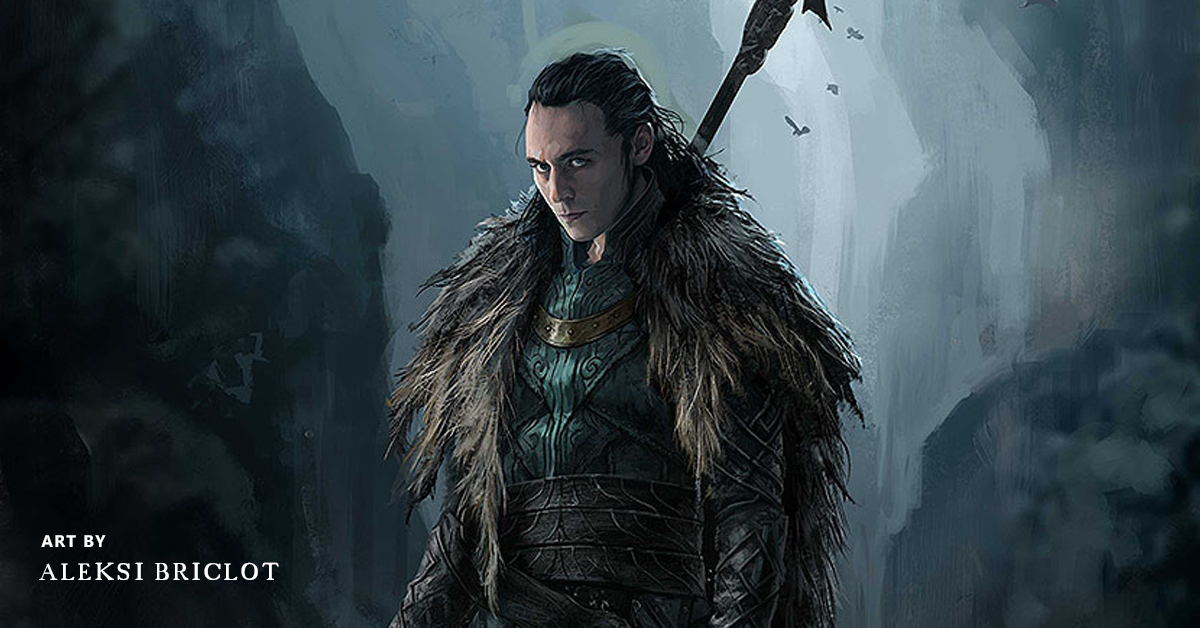
There is a difference between a Jotun and a giant. Usually, when we are talking about a giant, it’s in terms of stature. Very rarely do we see male giants in Norse mythology. They are typically gylfgr or gygr, which are female giantesses. These giantesses are almost always also referred to as trolls. You’ll note that Angrboda, who is related to Loki in the sense that she was his mistress, is often referred to as a troll. Gygr refers to size, and when we talk about male giants, they are referred to as Risi, which means something akin to “tower person” or “person of towering stature.” This refers to their size.
When we talk about Jotun, it means “eater” or “consumer.” What Jotun refers to is the proclivity of these individuals to consume energy, and there is a counterpart to the Jotun just across the Ginnungagap. You have the Jotun, who are referred to as the ice giants. Loki’s father, Farbauti, is a noted and powerful Jotun. Their counterpart, and the other primordial power within Norse mythology, are those who hail from Muspelheim, and that would be the Thurs, which means “thirsty” or “drinker.” The two “giant” groups that we get are not always giant in stature but are giants in power. Jotun are those that come from the land of ice, Niflheim, and the Thurs come from the land of Muspelheim, the land of fire. Where do we find the counterpart relationship between these two things? Fire and ice, consume. It’s what one might refer to as a metaphor.
Family of Loki
Farbauti’s name translates roughly to “powerful striker,” “dangerous striker,” or “anger striker,” and this is how we know he was a noted warrior among the tribe of the Jotun. Loki’s mother was a notable member of the other tribe, a distinguished woman of Muspelheim. This isn’t something that you’re going to find noted anywhere in common academia. This comes almost exclusively from our clan’s keeping of these stories, but she is a woman of Muspelheim and known as a Thurs in our stories. Her name is Laufey or “goddess of the leaf.” We know her as Nal or “needle.” There is so much more to go into on that front alone that it absolutely cannot all fit in one video. Look forward to a large episode and blog post on Loki for Patreon members in August 2022.
Loki has three children, none of which are animals or monsters. Well, at least not in the strictest sense. I guess I should say that none of them start out as animals or monsters. His two sons are Nari and Narfi, often confused as being the same child, but in our clan’s lore, they are not. They are two separate children. He also has a third child named Narifey, a daughter who is a kind of twin to Narfi, but they are actually born to two different mothers. That’s a whole other weird Loki story we’ll get into in the Patreon episode.
He has a wife named Sigyn, who is beloved among the goddesses, and he has a mistress named Angrboda, or “distress bringer.” As you can imagine, she is not beloved among any of the goddesses. He also has a second mistress who is all but unnamed in the common lore, but she is believed to be a woman of Muspelheim. Loki has two brothers, neither one of them being Thor or Odin. He is the middle child, and they are all children of Farbauti and Laufey. The brothers, Helblindi and Byleist, exist in the realms of Niflheim and Muspelheim, each being a lord of those realms.
Loki is responsible for every major death in the Norse mythos leading up to Ragnarok, and many of those deaths are orchestrated in such a way that it leads to Ragnarok. The victims that land on that list include both of his brothers, but that’s not something you’ll find in common lore as they are scarcely mentioned. Each of them gets only two or so mentions in the whole of the Eddas and the sagas.
Nature of Loki
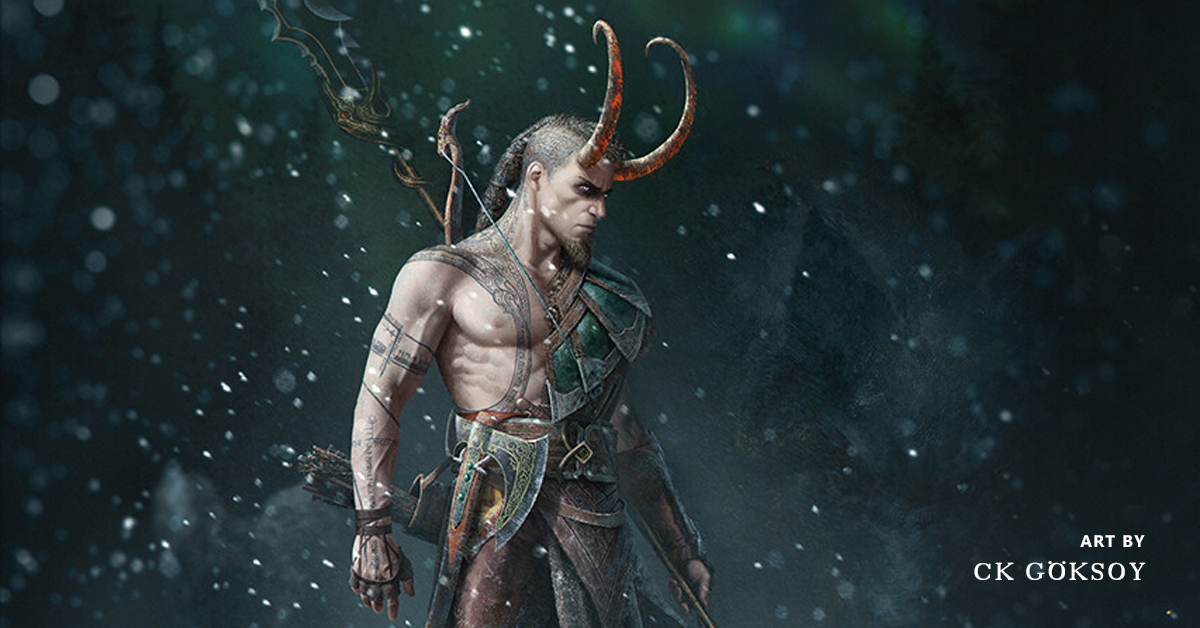
Contrary to popular belief, Jormungandr, Fenrir, and Sleipnir are not the children of Loki, at least not in the sense of traditional birth. They are born of the mouth of Lopt, which is Loki’s real name. Lopt comes from the attribution of his parents being of Muspelheim and Jotun, of Niflheim. The two realms come together to create the heavens, and Lopt or Loptr means “of heaven” or “of air,” which is why Loki is commonly associated with the devil (fallen angel Lucifer) as they were both shining children of heaven. Loki is a god of wind and fire. Something that is scarcely known among people who love Norse lore is that those are the specific domains of Loki.
Fun fact: There is no historical record of worship of Loki among Scandinavians of the time, as his very nature was antithetical to the base credo of the people and the gods they revered. The oldest records of Loki cults are from within the last 100 years or so.
He gained the title of Loki presumably for two reasons. The most commonly discussed reason among academics is that he earned it because of the spinning of lies that he does. There’s a great web, like that of a monstrous spider, ensnaring everyone with his terrible lies over and over again. While that is definitely part of it, what we believe is more apt is how he learned to tie knots from the goddess Ran. Ran was the only god or goddess in existence who could fish with nets because she owned the only net in existence, which she made herself. She taught Loki how to tie knots, and Loki translates to “tangled” or “knot.” What we understand is that Loki stands for how he ties knots in the fates of gods and men alike, how he binds them together and pulls them in with his net. It’s important to note the difference between a web and a net because the web requires people to be drawn in, while the net comes out of nowhere. It’s a surprise. It changes the fate of even the most vigilant and notable of creatures.
You might say Loki did this to the gods because the gods did this to men, and you would be 100% correct. But there was no altruism in it. Loki did this purely for the pleasure of it, but not just pleasure. Loki is the avatar of a primordial chaos god. He fed off the chaos and the constant discord he created. He did it because all the chaos, anger, and fear fueled him and gave him power. Every little bit that he built made him and sustained him.
This wasn’t the first time that Loki had done so. As I mentioned, Loki is a traveler god, and if you look at the story of how Loki goes through Norse mythology, starting out with the simple little things of causing displeasures and disputes, getting Thor’s hammer stolen, getting Thrym killed by getting Thor’s hammer stolen, the cutting of Sif’s hair – all of these little things eventually lead to great, massive conflicts.
Loki is believed by many scholars to be responsible for Thrmyr gaining possession of Thor’s precious weapon, Mjolnir. He’s also accidentally responsible for Thor getting the hammer in the first place.
The biggest problems with the Jotun are caused because of Mjolnir. Mjolnir is only obtained because of Loki’s transgression against Sif. His transgression against Sif is passed off as a harmless joke, but Loki is seamlessly involved with every single step that leads to the war between the Jotun, the Vanir, Muspelheim, and the Thurs. And, if you include the banquet of Idun where Loki kidnaps Idun and causes all of the gods to start losing their immortality, it’s very similar to the story of another god of wind and fire, Sun Wukong of Taoist mythology. While I would absolutely love to go deeper into that, we’ll be ending here for now because there is just so much that goes into it.
You’ll be able to get lots more information on Loki in the Patreon episode, and a lot of it will be pure clan lore as opposed to what you can already find in academic media. If that’s something you are interested in, we greatly appreciate the support for the content because it allows me to keep sharing the stories that have been handed down to me.
Until next time. All hail the Black Dragons.